

Genesis 12:1-4 New Revised Standard Version (NRSV)
12 Now the Lord said to Abram, “Go from your country and your kindred and your father’s house to the land that I will show you. 2 I will make of you a great nation, and I will bless you, and make your name great, so that you will be a blessing. 3 I will bless those who bless you, and the one who curses you I will curse; and in you all the families of the earth shall be blessed.”4 So Abram went, as the Lord had told him; and Lot went with him. Abram was seventy-five years old when he departed from Haran.
Happy New Year!
 There were lots of Happy moments for me this Christmas and New Years: Singing silent night by candle light, watching our son’s face light up with the realization that Santa had come to visit, seeing old friends, walks in the park with friends- hot coffee in hand, sitting by the fire, and watching the twinkling lights of the Christmas tree.
Happy Memories:
What were your happiest moments this Holiday season? Was it:
- a meal with loved ones?
- A nap on the couch with a pet on your lap?
- A fun time with a grand baby?
- An unexpected visit from a friend or family member?
No matter your age or stage in life we all want to be happy. Not a surface level happy, but happiness in the sense of contentment and wellbeing. This desire is ubiquitous. Genesis- the first book of the Bible- is the foundational book of the Pentateuch (the Hebrew name for the first 5 books of the Bible). It tells the primordial story of humanity. 
It covers the dawn of creation, to the establishment of the Judeo-Christian patriarchs. The first of these leaders are Abraham and Sarah.
In Genesis chapter 12 verses 1-4 God looks at Abraham and says: “You will be blessed to be a blessing.” These words “Blessed” and “Blessing” can be defined as happiness, contentment, and well-being. Etymologists refer to the original meaning of “blessed” as:“supremely happy”.
In other words, God is saying to Abraham: “you will be supremely happy so that others might be supremely happy too.”
Do not confuse the biblical word for happy with the modern world’s definition. Divine happiness is not contingent on:
- the size of your pocket book,
- footprint of your house,
- make and model of your car,
- degrees attained
- or any other value that can be quantified.
It wasn’t until the medieval period that the words blessed and happy became confused. Suddenly, happiness started to lose it’s divine origins and became assimilated with worldly prosperity. A prime example of our modern confusion of the true meaning of happiness is the internet phenomenon of posting things to make yourself look great and successful but humble because you typed #blessed or #lucky after it.
Some call this the “Humble brag”
But this is not the goal of the conversation between God and Abraham. Abe isn’t going to take a selfie with a shining happy face and post “ YHWY just told me that I’m blessed to be a blessing y’all!!! #Blessed.”
 When we wish someone a Happy New Year we can do so from two different perspectives:
1.) A worldly perspective:
“Happy New Year! I hope this year is full of fortuitous luck, prosperity, and fortune.”
OR 2.) A Christian perspective:
“Happy New Year, I pray this year is full of divine contentment and peace that surpasses understanding.”
Resolutions must be “SMART”
We can work on our happiness. It is possible and I believe important to develop faithful joy and happiness as a disciple of Jesus. This takes work. As author, Gretchen Rubin points out in her book The Happiness Project:
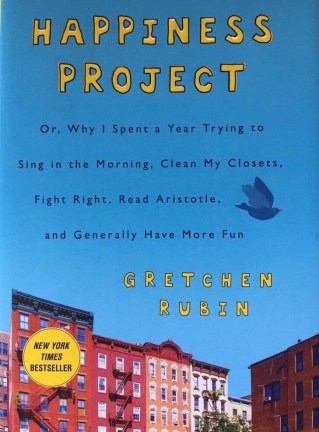 “ Current research underscores the wisdom of chart-keeping . People are more likely to make progress on goals that are broken into concrete, measurable actions with some kind of structured accountability and positive reinforcement.”
In other words, you need to make sure that your Happiness Resolutions are smart. #smarthappiness
To make them SMART think:
Specific
Measurable
Achievable
Relevant
Time-Bound
In other words: The How, What, When, and Where of your happiness goals.
For example, if your resolution is: “Be more mindful that I make my own happiness”
I’d ask you: “what would help you cultivate mindfulness and gratitude?” Perhaps you take on a daily prayer and meditation time. Say 5 minutes a day, light a candle, read Psalm 1 and sit in silence with God.
Many people I know wrote resolutions about relationships such as:
-
“to cultivate friendships more richly”
-
“Reconnect with friends”
-
“Make time with family more meaningful”
My challenge to you is: How are you going to be smart about your resolution? #smart
I’d suggest you write down the list of relationships that you want to prioritize. Then make a daily effort to pray for them, a weekly/monthly effort to speak or meet up with them.
 Many people, after last week’s sermon, wrote resolutions about happiness despite circumstances:
One said, “ To be happy and content, wherever and whenever.”
Others wrote:
-
“Not let the small stuff get me down”
-
“Worry less by replacing negative thoughts with positive”,
-
“Face what the day brings with Grace”,
You can be SMART about these resolutions in many ways: challenge yourself to write 3 things daily that you’re grateful for. Pick an accountability partner and email each other once a week with a list of ways you’ve seen God at work in your life during that time.
For those whose resolutions were about prayer such as:
-
“more prayer time”-
-
“deeper prayer life”
-
“more meaningful prayers”
-
“praying more for loved ones”
I’d ask you: What’s your current prayer time like and what would make it more effective? Perhaps it would be helpful to set up a personal prayer station, a specific place you go to at a specific time each day to pray.
I really loved this resolution: “To be less critical of others”
This is a great happiness challenge!
For this resolution I’d invite you to be SMART about it by saying; “For every critique I give I will also give two affirmations.” You could write a happiness mantra or breath prayer and say it or think it when you are feeling critical, frustrated, or angry.
Happy Christians 
Christians have gotten a bad rap. We’re known as : hypocrites, party poopers, Bible Thumpers, Fundamentalists, Tee-totalers, bigots, haters, elitists, classists, and so much more terribleness that I don’t wish to continue. While we might think of America as a Christian nation, the reality is that 8 in10 individuals in our own community don’t go to any church or affiliate with any religious organization.
I’d like to change this.
That’s why we’re taking the New Year to focus on the joy, abundance, and happiness of being a believer in Jesus Christ. Not just so our own lives will be blessed but so that our witness to others
will be truly convincing and convicting.
Application:
- Write down your general New Year’s/ Happiness Resolution(s).
- Below it write the SMART acronym with each letter’s meaning: specific, measurable, achievable, relevant, and time bound.
- Reflect on your resolution and how it can be more detailed in relationship to the SMART expectations.
- Now re-write your resolution(s) with the SMART mentality.
May the Road Rise Up to Meet Y’all,
Rev.Wren

 RevWren