
What I Once Thought
I thought Feng Shui was a pagan practice. I believed Feng Shui was a superstitious set of beliefs that had no positive potential in relationship to my faith. Then I was introduced to the heart of Feng Shui by a Christian interior designer. Her conceptualization of energy and its movement through space intrigued me.
I began to study Feng Shui and soon became captivated by its simple and universal applicability.
The Basics
 The words “Feng” and “Shui” are Chinese for “wind” and “water.” The term refers to the ancient Asian practice of observing the patterns of wind and water through geographical regions over time.
I’m from Alabama, a state in the U.S. most widely known for its NASCAR loving, Bible thumping, racially divided culture. However, none of these lines or cliques matter when you’re running from 165 mph winds with rain pumping down while hail stones the size of baseballs pummel you. Alabama is the epicenter of tornado activity. The study of “wind” and “water” patterns have always had my attention. Now, thanks to some study, I realize it has connections in a prehistoric Asian practice and the connections don’t stop here.
Application in Ministry
In pastoral ministry, I have learned that a room’s set up impacts how people interact.
 If a room is warm and inviting, people are more likely to open up and have meaningful conversations. When a space feels inviting the people in it are more prone to invite others to join in their conversations. If a sanctuary is accessible, people are quicker to invite friends whether or not they have physical handicaps. If an office is comfortable and offers basic creature comforts like a throw blanket and beverages then people are less anxious and generally more amenable.
I assumed these effects were due to the basic principles of hospitality but then I started to wonder why a certain flow of furniture, lighting, and landscaping had noticeable influence on human interactions.
The flow of energy seemed meaningful but I couldn’t discern why.
Scripture Meets Feng Shui
Then I studied the history of Feng Shui.
 The language that Professor Lin Yun uses to describe Feng Shui brought it all home for me:
“All permutations, from cosmic to atomic, resonate within us.The force that links humanity and its surroundings is called ch’i (translated as human spirit, energy, or cosmic breath).”
These words seemed mysteriously familiar. Where had I heard something like it before? Then inspiration struck. I pulled out a Bible and flipped to the opening page of Genesis:
“In the beginning God created the heavens and the earth. 2 Now the earth was formless and empty, darkness was over the surface of the deep, and the Spirit of God was hovering over the waters.” [Genesis 1:1-2, NRSV]
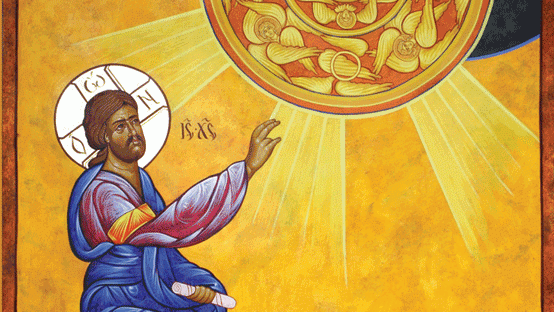
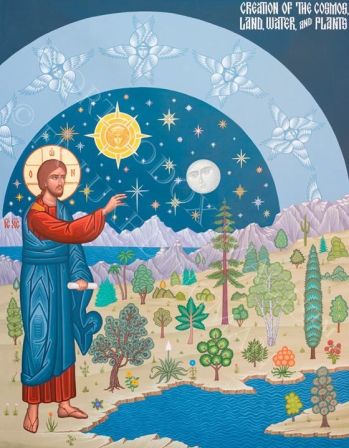
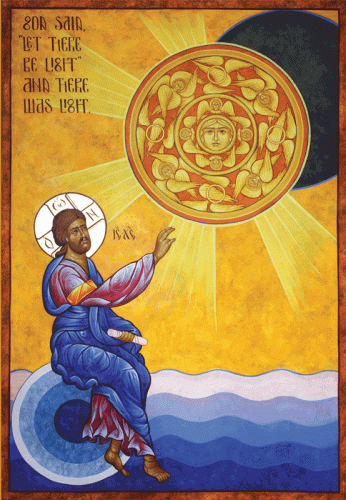
The word “Spirit”, ruach in Hebrew, from Genesis 1:2 can also be translated into: “breath” or “wind” and is synonymous with “Divine breath” and “ The Holy Spirit” throughout scripture. The creative birth of the universe, according to Genesis, and Feng Shui principles, began with “wind” and “water.”
I don’t fully understand this connection, but I do believe that the ancient Chinese practice of Feng Shui is a means of God’s grace.
Here are my recs for an introductory look at Feng Shui: 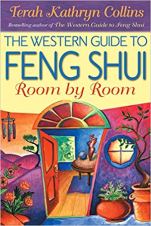
- Home Energy Design Podcast by Amanda Gates
- Interior Design with Feng Shui by Sarah Rossback
- The Western Guide to Feng Shui : Room by Room by Terah Kathryn Collins
Application:
1.) Read one of the suggested books or listen to a podcast on Feng Shui
2.) Discuss this topic with trusted friends and see if it resonates with them.
3.) Reach out to me for a home or office energy design consultation and see if you notice a positive difference from its effects.
Blessings Y’all,
Rev. Wren

 RevWren