

Clueless Beginnings
I didn’t know the first thing about Pilgrimage. I didn’t know how to plan a foreign trip, let alone backpack. Not that either are required for pilgrimage as I now know. But I was determined.
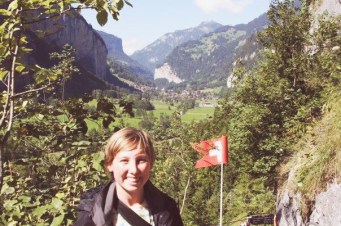 It was 2006. My grandmother had just died. I felt an unexpected sense that I must find a way to pay tribute to her life and all that she had taught me.
I was going to be spending a semester abroad in England and decided there was no better time to try to put together just such an adventure. I told no one. I wasn’t sure I knew what I was doing and didn’t want to be embarrassed if it didn’t work out.
Planning
Then I started planning. What would be the destination? How would I get there? How many stops would I make along the way?
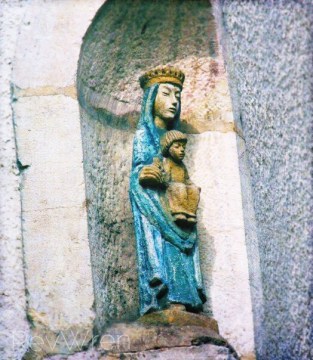 The destination became obvious to me after mere minutes thinking about my grandmother. One of her favorite things to do, the few times of year we were together, was to watch the Sound of Music and sing all the songs out loud. The night she passed away I woke myself up singing “I Have Confidence” from the musical. I felt my grandmother reaching out to me through the cosmos, sending me her love and confidence, as if she knew that I was going through a rough transition at both school and life.
Salzburg, Austria would be my destination. The main filming location for the Sound of Music.
I decided to fly from London to Paris and from there trek via train to Salzburg. I bought a Lonely Planet travel guide and sat in a cafe picking stops between the two points that seemed interesting. That was it.
Priceless Transformation
I had no idea what I was in for. 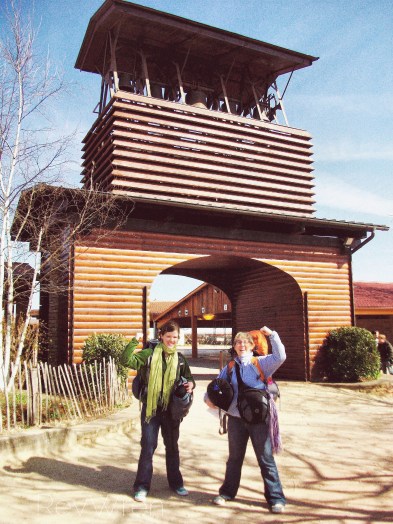
I had haphazardly designed my pilgrimage, to say the least, but it was glued together with tremendous heart. In the end, I was not disappointed.
I’ve since been on multiple pilgrimage experiences, each one unique. One thing connects them all. A pilgrimage is a journey with a spiritual intention. You do not need to be religious to plan or go on a pilgrimage. However, it can help to have a community of faith supporting you as you prepare for the journey and praying with you as you travel.
From my pilgrimage journeys I’ve learned a few basics to planning the journey.
Here are my 7 Steps to Planning a Pilgrimage:
1.) Take time out to discern and decide what your spiritual intention will be for the pilgrimage.
The intention need not be complex. Make it realistic, attainable, and meaningful for you. For example, it’s not realistic to seek “complete closure” after the loss of a loved one, but it is possible to seek “healing after loss.”
You can also make your intention open-ended, such as “I want to know myself better.”
2.) Determine if there are others you wish to journey with or if you will go on your own.
If there is someone or a group of persons you would like to invite on your journey, do so in person or on the phone. This is a conversation best had in real time instead of via email or text. For example, if you feel called to explore your family genealogy it can be especially helpful to find a member of your family who would like to go along with you.
3.) Determine a destination connected to your intention.
If you don’t know where to begin, identify your spiritual intention and do a library, web, or dictionary search on the topic.
Pick a realistic destination. It need not be foreign or even far from your home. It only needs to be thoughtful and related to your intention. If you have financial or physical limitations, you can recreate a distant or difficult-to-reach destination through the use of imagery, symbols, and metaphor.
4.) Research the destination and potential stops from your beginning point.
There are thousands of classical pilgrimage routes and destinations. If you have picked a common destination, then search pilgrims’ writings who have gone before you. For example, The Art of Pilgrimage by Phil Cousineau
Stops should meet logistical needs as well as spiritual ones. Include breaks that will be restful pit stops with cultural interest. You might very well find that the stops along the way are some of the most inspiring parts of your journey.
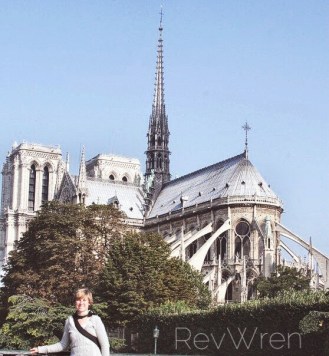 5.) Decide on an intentional travel route to your Destination
There is no need to feel rushed while on pilgrimage so plan a route you think can be realistically accomplished. For example, if considering the Camino de Santiago, give yourself extra breaks as you start the journey to acclimate to the physical rigors of walking/biking.
6.) Identify a way to log your thoughts while on your pilgrimage.
A classical way to record your pilgrimage is through journaling, but you need not be constrained to a personal diary. You could use photography, drawing, poetry, or a bag of small collected items as a way to record your journey.
7.) Identify a small item that you will take with you on your journey and leave at the pilgrimage destination.
A traditional example of such a token is a strip of fabric, a small stone, or country of origin flag. Feel free to think out of the box. For example, you could take a lock of hair, a shell, a pressed flower, etc., to leave behind.

Application:
L1: Plan a simple pilgrimage that will take only a day to complete. Plan and implement it.
L2: Plan a pilgrimage that will take only a long weekend to complete. Plan and implement it. Then identify one to two people to share your experience with.
L3: Plan a pilgrimage that will take at least a full week to complete. Consider taking at least two other people with you or having a small group that will commit to praying for you while you’re gone and will meet with you before and after your pilgrimage to help you plan and debrief.
May the Road Rise Up to Meet Y’all!
Rev. Wren